
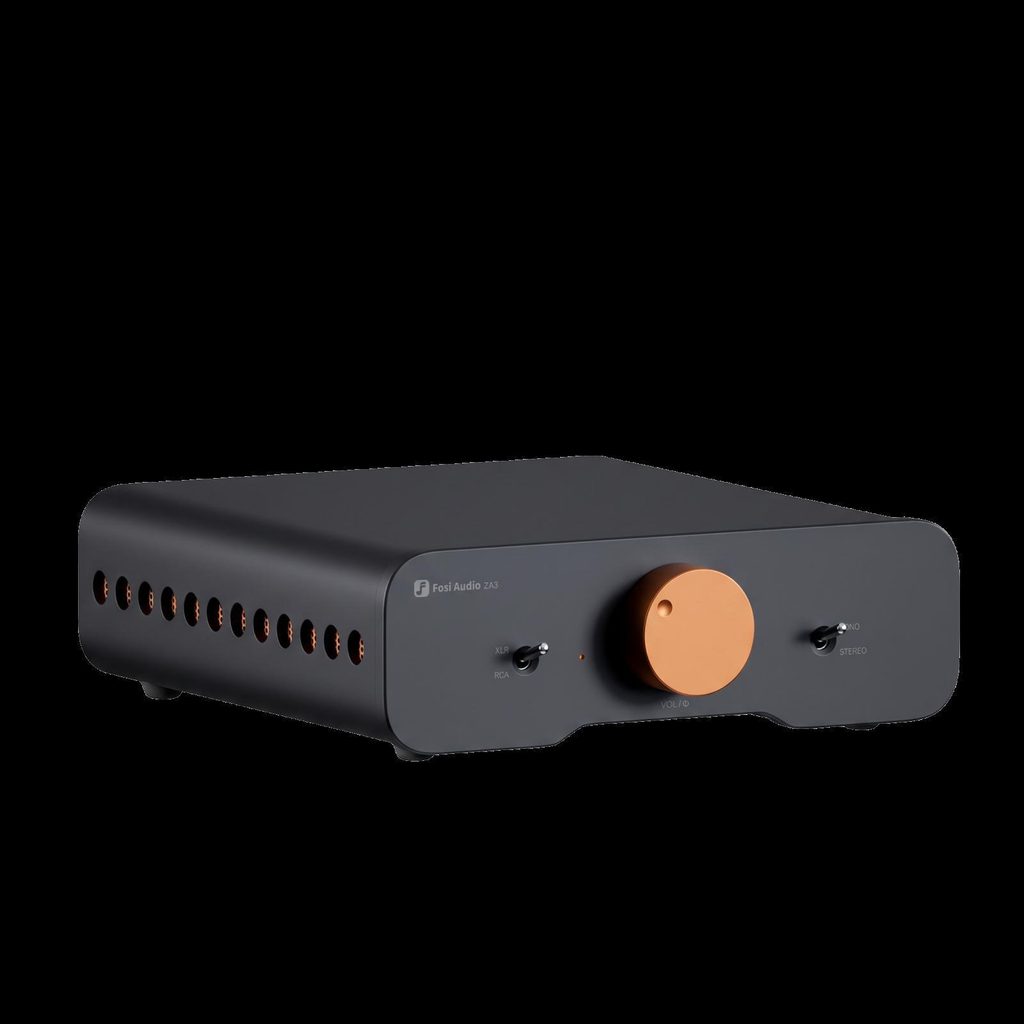
Walk into any audio shop or browse any listing and the first number thrown at you is watts. Fifty watts, a hundred watts, two hundred watts — bigger must be better, right? Not always. An amplifier buying decision built on wattage alone is one of the easiest ways to overspend or, worse, end up with a box that sounds strained in your room.
This guide explains wattage honestly: what the number means, how it relates to your speakers and your room, and how much power you actually need for the way you listen.
What a watt really means
A watt is a measure of electrical power, and in audio it tells you how much energy the box can deliver to your speakers. But the number on the box is only meaningful with context: measured into what impedance, at what distortion level, and across which frequencies. A rating of 100 watts into 8 ohms at 1% distortion is a very different thing from 100 watts into 4 ohms at 0.01% distortion.
Manufacturers know shoppers compare headline numbers, so some publish optimistic figures measured under friendly conditions. The honest ratings come with the fine print attached: continuous power, both channels driven, 20 Hz to 20 kHz, at low distortion. If a listing hides those details, treat the headline number with suspicion.
Your speakers decide more than the box does
Every speaker has a sensitivity rating, usually quoted as decibels at one watt measured from one metre away. A speaker rated at 90 dB needs half the power of one rated at 87 dB to play at the same volume — a 3 dB difference doubles or halves the power requirement. Efficient speakers are the cheapest way to make a modest amplifier sound big.
Impedance matters too. Most home speakers are rated at 8 ohms, but some dip to 4 ohms or lower at certain frequencies, which demands more current. A well-built amplifier handles those dips without breaking a sweat; a weak one can sound thin or even shut down. Check that the box you are considering is rated for your speakers’ impedance, not just for 8 ohms.
Room size and listening habits
A small bedroom or office needs surprisingly little power. At normal conversation-level listening in a small room, you are often using just a few watts. A compact amplifier is plenty there, and the extra money is better spent on better speakers. In a large open-plan living space, or if you regularly push the volume for movies and parties, headroom becomes important — you want power in reserve so loud peaks stay clean.
Distance counts as well. Sound level drops as you sit further from the speakers, so a listening chair four metres away needs considerably more power than a desk setup where you sit one metre away. Before you shop, measure your room and think about where you actually sit; it narrows the choice fast.
A practical way to choose
Start with your speakers’ sensitivity and impedance, then work out your room size and typical volume. Look for an amplifier rated to drive your speakers comfortably at that level with power to spare — roughly double your normal requirement is a good rule of thumb for headroom. Then compare a few shortlisted models on real owner reviews, not just spec sheets.
If you want to see how different power classes and designs stack up in practice, browsing a current amplifier lineup is a useful reality check: you can compare what each power tier actually offers for your budget instead of guessing from numbers alone.
Myths that cost you money
Myth one: more watts always mean better sound. In reality, doubling power adds only 3 decibels — a small step in loudness. A well-designed 50-watt amplifier sounds better than a sloppy 200-watt one, because clean power matters more than big numbers.
Myth two: expensive cables transform the sound. Decent cables matter, but beyond solid construction and correct gauge, the returns vanish. Put the money toward speakers or a better amplifier instead of jewellery for the back panel.
Myth three: you must match brands. There is no rule that says the amplifier and the speakers must come from the same company. Mix freely, match on specs and sound, and ignore anyone selling you a ‘matched system’ at a premium.
Myth four: old gear is always worse. A well-kept amplifier from a good maker can sound superb for decades, and the used market is full of bargains. Just check for worn controls, humming transformers, and availability of service before buying vintage.
Myth five: you need to spend a fortune to enjoy music. A careful amplifier choice at a modest price, paired with efficient speakers and placed well, delivers genuine hi-fi sound — and an amplifier bought with sense always beats a showpiece bought for status.
Watts are a useful starting point and a terrible finish line. Match the box to your speakers, your room, and your ears, leave yourself headroom, and ignore the race for the biggest number. The right amount of power is the amount you never have to think about — it just sounds effortless, every time you press play.