
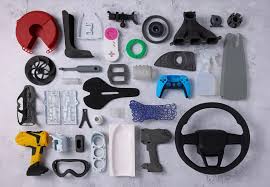
When diving into the world of Fused Deposition Modeling (FDM) 3D printing, it is easy to become entirely captivated by the hardware. Watching a robotic nozzle zip around a glass plate, meticulously building an object out of thin air, is a mesmerizing process. However, the machine itself is only one half of the manufacturing equation. The true secret to producing incredible, functional, and beautiful 3D prints lies in mastering the raw materials you feed into it.
To a beginner, the 3D printing material market can feel like an overwhelming alphabet soup of acronyms: PLA, ABS, PETG, TPU, and PVA. Choosing the right plastic is arguably the most critical decision you will make for any given project. If you print a decorative tabletop statue out of the wrong plastic, it might look stringy and messy. Conversely, if you print a functional mechanical bracket out of a weak plastic, it will likely snap under pressure.
In this comprehensive guide, we are going to demystify the most common 3D printing thermoplastics, explain their unique physical properties, and help you decide exactly which material to load up for your next big project.
The Undisputed King for Beginners: PLA (Polylactic Acid)
If you have just unboxed a brand new 3D printer, PLA is the absolute best material to start your journey with. Polylactic Acid is the most popular 3D printing material globally, and for very good reason: it is incredibly forgiving and exceptionally easy to use.
Unlike traditional petroleum-based plastics, standard PLA is a bioplastic derived from renewable organic resources, such as fermented plant starch (usually corn or sugarcane). Because of its organic origins, melting PLA emits a slightly sweet, pleasant odor, completely avoiding the harsh chemical fumes associated with other industrial plastics.
Why use it? PLA melts at relatively low temperatures—usually between 190°C and 215°C—and does not strictly require a high-temperature heated print bed to adhere properly. It is highly resistant to warping as it cools, meaning your prints will stay flat on the bed and maintain excellent dimensional accuracy. It is the perfect choice for visual models, tabletop miniatures, cosplay props, and general household items that will not be exposed to high heat or heavy mechanical stress. Furthermore, PLA is available in an astonishing variety of aesthetic blends, including “Silk” for a metallic shine, “Matte” to hide layer lines, and even wood-filled variants that can be sanded and stained.
The limitations: Because it has a low glass transition temperature, you cannot leave PLA parts inside a hot car on a summer day, or they will rapidly soften and deform. It is also quite brittle, meaning it tends to snap rather than bend when subjected to extreme pressure.
The Durable All-Rounder: PETG (Polyethylene Terephthalate Glycol)
Once you have mastered PLA and want to print functional parts that require more durability, your next logical step is PETG. If the acronym sounds familiar, it is because PET is the exact same base plastic used to manufacture clear water bottles and food containers. The “G” stands for glycol, an additive that makes the plastic less brittle and much easier to push through a 3D printer nozzle.
Why use it? PETG offers a fantastic middle ground. It is significantly stronger and more impact-resistant than PLA, possessing a slightly flexible nature that allows it to bend and absorb shock before breaking. It also features excellent temperature resistance and is highly impervious to water and harsh chemicals. This makes it the ideal choice for mechanical gears, drone frames, outdoor gardening tools, and snap-fit joints.
The limitations: PETG is incredibly sticky when melted. While this is great for layer-to-layer adhesion (making the parts incredibly strong), it makes the material highly prone to “stringing”—leaving tiny, hair-like webs of plastic between gaps in your model. It also requires hotter printing temperatures, usually around 230°C to 250°C.
The Industrial Standard: ABS (Acrylonitrile Butadiene Styrene)
For many years during the early days of desktop 3D printing, ABS was the gold standard. It is the exact same tough, impact-resistant thermoplastic used to manufacture Lego bricks, car bumpers, and protective headgear.
Why use it? ABS is incredibly strong, can withstand very high temperatures without deforming, and is unmatched when it comes to post-processing. You can easily sand it, drill it, and even use acetone vapor to chemically melt and smooth the outer surface until the layer lines completely disappear, resulting in a glossy, injection-molded look.
The limitations: ABS is notoriously difficult for beginners to manage. It shrinks significantly as it cools down to room temperature, meaning it is highly prone to warping and peeling off the build plate mid-print. To print ABS successfully, you typically need an enclosed 3D printer that traps ambient heat, keeping the surrounding air warm and stable. Furthermore, melting ABS releases strong, unpleasant fumes (VOCs), meaning you absolutely must print it in a well-ventilated room or use a machine with a HEPA carbon filter.
Flexible and Fun: TPU (Thermoplastic Polyurethane)
What if you want to print something squishy? TPU is your answer. Unlike the rigid plastics mentioned above, TPU is a highly elastic elastomer. It feels, bends, and behaves just like rubber.
Why use it? You can use TPU to print custom shock-absorbing phone cases, flexible watch bands, RC car tires, shoe insoles, or watertight rubber gaskets. It is incredibly durable and can stretch and compress repeatedly without tearing or losing its original shape.
The limitations: Because feeding TPU through a 3D printer is akin to pushing a wet noodle through a straw, it can be tricky to manage. It requires specialized “direct drive” extruders and very slow print speeds to prevent the flexible material from buckling, coiling, and jamming the internal gears.
Pushing Boundaries: Mixing Materials and Colors
As you grow more comfortable with individual material properties, you might find yourself wanting to push the boundaries of what is possible. For instance, what if you want to print a complex mechanical part that features a rigid PLA body but has integrated, flexible TPU hinges? Or what if you want to print a vibrant, multi-toned toy without having to spend hours manually painting it afterward?
This is where advanced printing hardware comes into play. By upgrading to a dedicated Multi-color 3D printer, you open up a world of multi-extrusion possibilities. These advanced systems feature independent print heads that allow you to load different types of plastics simultaneously. You can seamlessly transition between materials or mix primary colors to create stunning, visually dynamic models straight off the build plate with zero post-processing required. It completely changes the scope of what you can manufacture at home.
The Golden Rule: Proper Storage
Before you start printing with any of these materials, there is one critical rule every maker must learn: plastic loves moisture. Almost all 3D printing plastics are hygroscopic, meaning they actively absorb invisible humidity from the surrounding air. If your plastic absorbs too much water, that moisture will boil and turn to steam inside the hot nozzle. This causes popping noises, severe stringing, brittle parts, and exceptionally ugly surface finishes.
Therefore, buying high-quality Filament is only the first step of the process; you must also store it correctly. Always keep your unused spools sealed in airtight plastic bags or specialized dry boxes loaded with silica gel desiccant packets. If your material does get “wet” from being left out in a humid room, you can purchase specialized heated filament dryers (or use a modified food dehydrator) to safely bake the moisture out before running it through your machine.
By understanding the strengths, weaknesses, and storage requirements of these fundamental materials, you empower yourself to tackle almost any DIY project imaginable. Armed with the right plastic, your 3D printer transforms from a simple novelty device into a true desktop manufacturing powerhouse.