
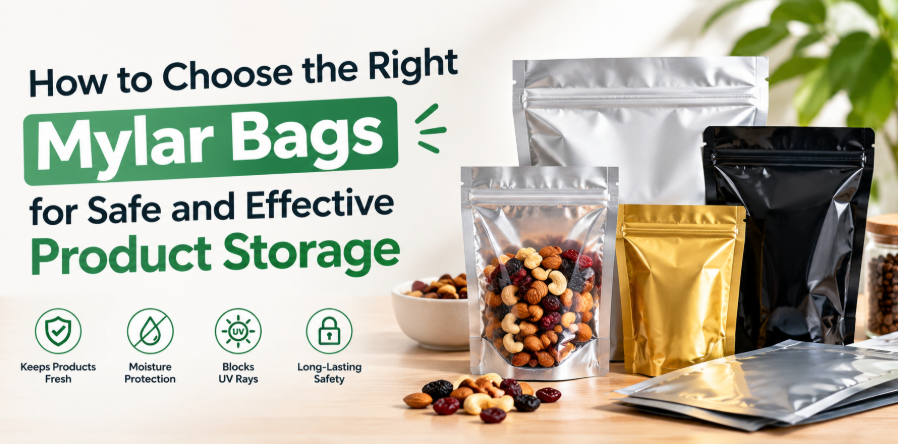
Proper storage is essential for maintaining product quality, organizing supplies, and protecting items from environmental exposure. Whether businesses package herbs, dried goods, or other products, selecting suitable storage materials can make a significant difference. Mylar bags have become a popular flexible packaging option because they are lightweight, available in different sizes, and can provide useful barrier protection when designed for the intended application.
However, not every bag offers the same level of protection. Material construction, closure quality, storage conditions, and product requirements all influence how well a package performs. Understanding these factors helps businesses and consumers make more informed packaging decisions.
What Makes Mylar Bags Useful for Storage?
Mylar is a polyester film used in various packaging and protective applications. Many commercial Mylar-style bags combine multiple material layers to provide specific barrier properties. Depending on their construction, these bags can help limit exposure to moisture, oxygen, and light.
For readers interested in this specific application, this guide to Mylar bags for cannabis storage provides a more focused starting point for understanding packaging considerations and available options.
Some designs feature resealable closures, while others require heat sealing for a secure package. The appropriate option depends on whether the product will be opened frequently or sealed for longer-term storage.
Important Factors When Selecting Storage Bags
Choosing packaging involves more than finding a bag that looks durable. Businesses should evaluate several practical features before making a purchase.
Material Thickness and Barrier Protection
The thickness and composition of a bag influence its strength and protective performance. Some products require stronger packaging to withstand handling, while others need better protection from light or moisture.
A metallic-looking surface does not automatically guarantee a particular barrier level. Buyers should review the manufacturer’s material specifications and choose a construction suitable for the product.
Closure and Seal Quality
A reliable closure helps keep the contents contained and reduces unwanted exposure during normal storage. Resealable zippers are convenient when a package needs to be opened repeatedly, while heat sealing can provide a more secure closure for certain applications.
It is important to remember that a zipper alone does not necessarily create an airtight or moisture-proof package. The complete bag design and sealing method determine the level of protection.
Appropriate Bag Size
The right size helps keep products organized without using unnecessary packaging material. A bag that is too small may strain the seams or closure, while an excessively large bag can occupy more storage space than necessary.
Businesses should consider product volume, weight, and how the package will be handled. Testing different sizes before purchasing in bulk can help identify the most practical option.
Why Storage Conditions Matter
Even well-designed packaging cannot compensate for every unsuitable storage condition. Temperature, humidity, direct sunlight, and handling practices can affect the quality of stored products.
Keeping packages in a clean, dry location can help reduce unnecessary environmental exposure. Bags should also be protected from sharp objects that could puncture the material.
For products that require specific storage conditions, manufacturers’ instructions should take priority. Packaging should be treated as one part of a complete storage strategy rather than a guarantee of indefinite freshness.
Cannabis Mylar Bags and Specialized Packaging Needs
Cannabis products may require packaging that addresses light exposure, odor containment, product freshness, and applicable safety requirements. The appropriate design depends on the product type, local regulations, and the conditions under which it will be stored or distributed.
Some specialized bags include multilayer films, resealable closures, or child-resistant features. However, ordinary resealable packaging should not be assumed to meet child-resistant standards. Businesses must verify that the complete package complies with the requirements of the market where it will be sold.
How to Store Packaged Products More Effectively
Good storage habits can help packaging perform as intended. A few straightforward practices can make inventory easier to manage and reduce avoidable damage.
- Keep packages away from direct sunlight: Excessive light and heat may affect sensitive products and packaging materials.
- Use clean, dry storage areas: Avoid placing packages in damp environments or directly on wet surfaces.
- Inspect closures and seams: Check for visible damage, incomplete seals, or punctures before storing products.
- Organize inventory clearly: Labels and dates can help businesses identify products and manage stock rotation.
- Follow product-specific instructions: Different materials and contents may require different temperature and humidity conditions.
Businesses handling multiple product categories should also store items according to their individual requirements instead of assuming that one storage method suits everything.
Cost and Sustainability Considerations
Packaging costs depend on bag dimensions, material composition, printing, closure type, and order quantity. Buying in bulk may reduce the unit cost, but businesses should consider storage capacity and actual demand before placing large orders.
It is also worth examining the environmental implications of flexible packaging. Some bags contain several bonded material layers that can make recycling difficult through ordinary collection systems. Recycling options depend on the exact packaging structure and the facilities available locally.
Businesses can make more informed choices by checking material specifications, avoiding unnecessary oversized packaging, and verifying environmental claims before using them in marketing.
Conclusion
Selecting the right label pouches requires attention to material quality, barrier performance, closure design, and storage conditions. The best option is one that matches the product’s specific requirements rather than simply offering the thickest material or the most attractive appearance.
By reviewing specifications, testing samples, and following appropriate storage practices, businesses can make more practical packaging decisions. For specialized applications such as cannabis storage, it is equally important to consider product protection, child safety where required, and compliance with applicable regulations.