
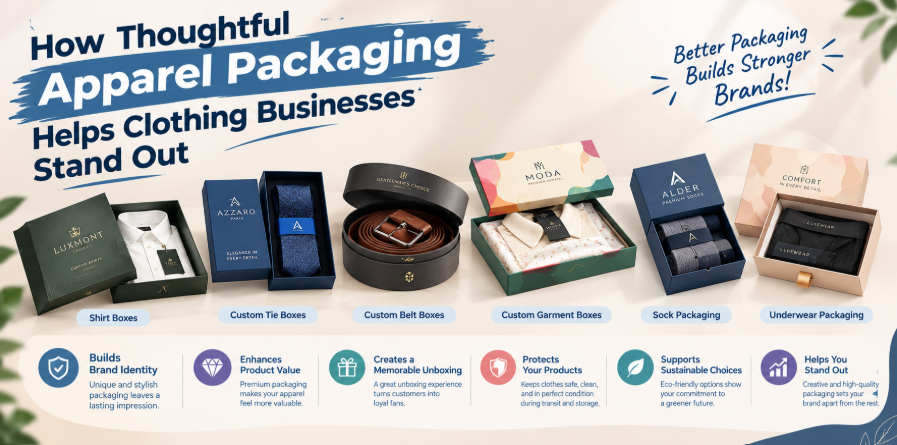
The fashion industry is about more than clothing designs, colors, and fabrics. The way a product is presented can also influence how customers perceive a brand. From boutique stores to online fashion retailers, businesses are paying greater attention to packaging because it protects garments, improves presentation, and creates a memorable experience for customers.
Custom apparel packaging boxes combine practicality with visual appeal. A well-designed package keeps clothing organized during storage and delivery while reflecting the style and identity of the business. When packaging is planned carefully, even a simple clothing purchase can feel more professional and personal.
Why Apparel Packaging Matters for Fashion Brands
Clothing packaging serves several purposes beyond holding a product. It helps protect garments from dust, dirt, and unnecessary handling while making orders easier to organize. For online retailers, suitable packaging is particularly important because products may travel through several stages before reaching the customer.
A properly sized box can keep folded clothing in place and reduce excessive movement during transportation. It can also help prevent garments from becoming unnecessarily creased when packed correctly.
Packaging influences the first physical impression customers receive after placing an order. Clean materials, secure construction, and an organized presentation can communicate attention to detail. These small elements may encourage customers to develop greater confidence in a business and its products.
Choosing the Right Packaging for Different Clothing Products
Not every clothing item requires the same type of packaging. The ideal solution depends on the product’s size, weight, material, and intended delivery method.
For example, shirts, scarves, and lightweight garments may fit comfortably inside compact boxes. Jackets, formal dresses, and multiple-item orders may require larger packaging with additional structural support.
Fashion businesses should consider the following factors when selecting apparel packaging:
- Product dimensions: Choose a box that fits the garment without excessive empty space.
- Material strength: Select packaging that can withstand normal storage and shipping conditions.
- Presentation: Use a design that complements the clothing brand’s style.
- Protection: Consider additional wrapping or inserts when garments need extra care.
- Storage efficiency: Select practical sizes that are easy to stack and organize.
Testing packaging with actual products before ordering in bulk can help businesses identify sizing problems and avoid unnecessary expenses.
How Custom Packaging Builds Brand Recognition
Brand recognition develops when customers repeatedly encounter consistent visual elements. Logos, colors, typography, and packaging styles can all contribute to a recognizable identity.
Custom apparel packaging gives fashion businesses an opportunity to present these elements beyond their websites and retail stores. A branded box can make an online order feel more carefully prepared and help customers associate the packaging with the business.
For example, a minimalist clothing brand may prefer neutral colors and simple typography, while a streetwear business may choose bold graphics and distinctive visual details. The most effective design is one that reflects the brand’s personality without making the packaging difficult to use.
Businesses exploring personalized options can review apparel packaging solutions to understand how customized box styles can support clothing presentation and brand consistency.
Creating a Better Unboxing Experience
The unboxing experience has become an important part of online shopping. Customers often appreciate receiving products that are neatly arranged and easy to unpack.
Fashion businesses can improve this experience through simple details, such as neatly folded garments, tissue paper, branded stickers, or a short thank-you card. These additions do not need to be expensive to make an order feel thoughtfully prepared.
However, presentation should never replace practical protection. Packaging must remain secure during transportation and should be easy for customers to open without damaging the contents.
Businesses should also avoid unnecessary layers that increase material use without providing meaningful benefits. A balanced approach combines attractive presentation with convenience and responsible packaging choices.
Sustainable Choices in Clothing Packaging
Environmental considerations are becoming increasingly relevant to packaging decisions. Many fashion businesses are exploring paper-based materials, recycled content, and packaging formats that use fewer resources.
Cardboard packaging can be a practical option for many clothing products because it is lightweight, customizable, and recyclable where suitable collection facilities exist. Nevertheless, recyclability depends on the material composition, coatings, adhesives, and local recycling systems.
Businesses can take practical steps to reduce unnecessary packaging by selecting suitable box dimensions, avoiding excessive inserts, and reviewing the materials used throughout their packaging process.
It is also important to make accurate environmental claims. Packaging should not be described as biodegradable or recyclable unless those claims are supported by the relevant material specifications and disposal conditions.
Managing Packaging Costs as a Business Grows
Packaging costs can become significant as a clothing business expands. Therefore, businesses should evaluate more than the price of an individual box.
Material selection, printing requirements, order quantities, storage space, and shipping dimensions can all affect the overall cost. Ordering larger quantities may reduce unit prices, but excessive inventory can create storage challenges if designs or product ranges change.
Standardizing a few box sizes may help businesses simplify inventory management while maintaining a consistent appearance. However, the packaging should still suit the garments being shipped.
Comparing samples, checking supplier specifications, and reviewing production quality before placing large orders can help reduce avoidable mistakes. A reliable packaging plan balances cost, product protection, and customer expectations.
Conclusion
Custom printing packaging boxes is an important part of the overall fashion shopping experience. It helps protect garments, improves product presentation, and gives clothing businesses another way to communicate their identity.
By selecting suitable materials, choosing practical box dimensions, and maintaining consistent design elements, fashion brands can create packaging that supports both everyday operations and customer satisfaction.
Whether a business sells casual clothing, premium garments, or fashion accessories, thoughtful packaging can help create a more organized and professional experience from dispatch to delivery.