
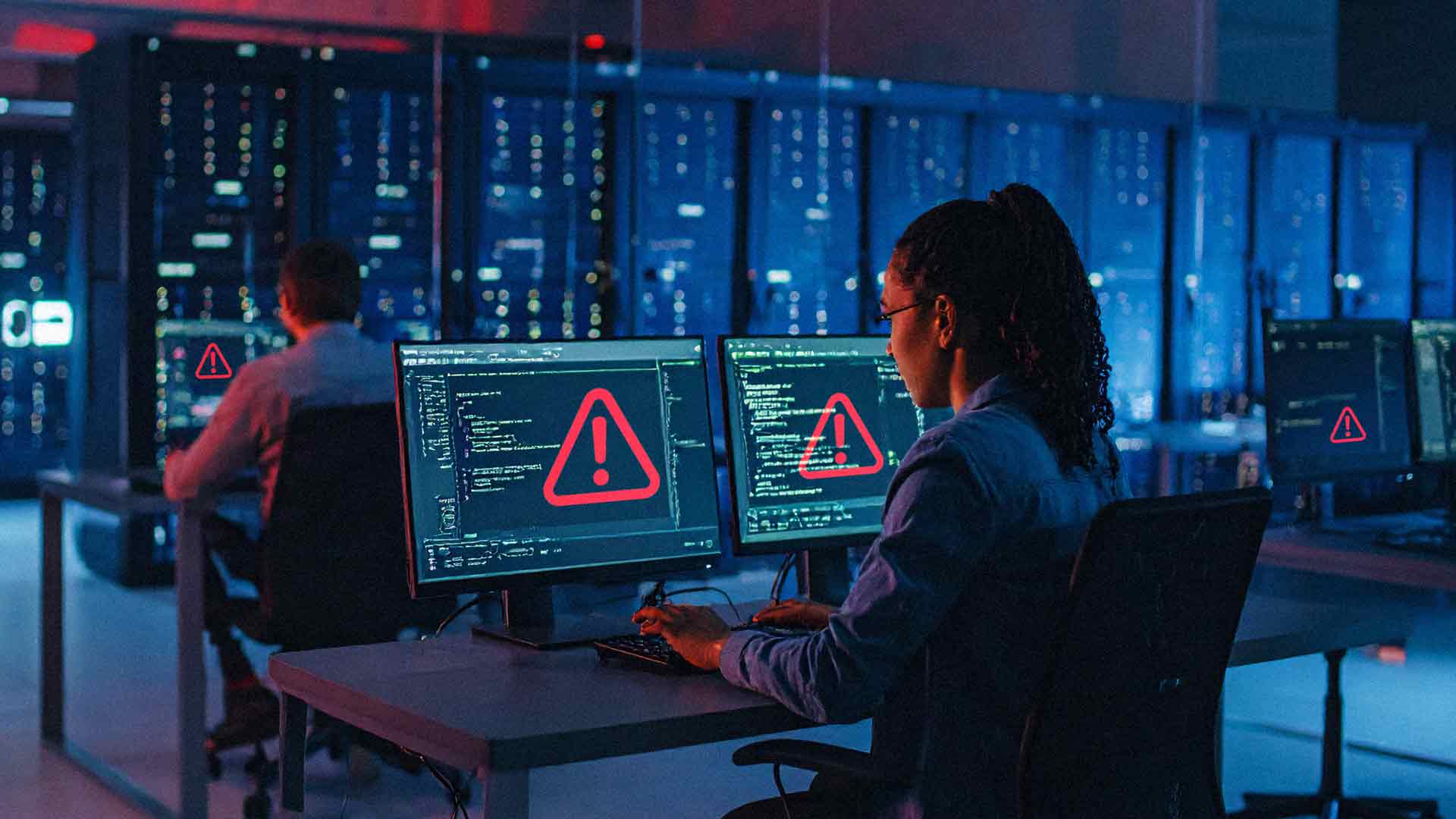
Every growing business eventually hits a physical ceiling. It usually starts with a low hum coming from a back room, but eventually, it becomes a source of constant anxiety. We are talking about the “server closet”—that dedicated room in your office where you keep the digital heart of your company beating.
In the early days, a few tower servers tucked away in a ventilated room worked fine. But as your team expands and your data needs explode, that room becomes a liability. You find yourself adding portable air conditioners to combat the heat, worrying about power surges during storms, and wondering if a simple locked door is enough to protect your client data. Relying on consumer-grade cooling and office-level physical security is a gamble with business continuity that you shouldn’t have to take.
That’s usually the moment forward-thinking leaders start looking into elevating your IT infrastructure. The shift isn’t just about freeing up square footage in your office; it is about acknowledging that your business has graduated from “makeshift” to “mission-critical.”
Moving to enterprise infrastructure—whether that means physically relocating your servers to a data center (colocation) or migrating to the cloud—is a strategic pivot. It changes IT from a vulnerability into a competitive advantage. It’s not just about technology; it is about securing the future of your business against downtime, theft, and disaster.
Key Takeaways
If you are a busy executive scanning for the bottom line, here is what you need to know about moving your infrastructure off-site:
- The “Closet” is a Financial Risk: On-premise server rooms lack the power redundancy and cooling capacity of data centers, making them prone to expensive failures.
- Colocation vs. Cloud: You don’t have to abandon your hardware. Colocation lets you move your assets to a secure facility, while the cloud offers virtual, scalable resources.
- Downtime Costs More Than You Think: The revenue and reputation loss from a single office outage often outweighs the investment in professional infrastructure.
- Local Support Wins: Detroit-based providers offer a “beck and call” partnership level—including physical help with migration—that national cloud giants simply cannot match.
The High Cost of the “Closet”: Why On-Premise is a Liability
It is easy to become complacent when your servers are just down the hall. You can see them, you can hear them, and that offers a false sense of control. However, keeping enterprise-grade hardware in an office environment creates a “scalability wall” that is difficult to climb over.
The Scalability Wall
Office buildings are designed for people, not high-density computing. There is a physical limit to how much power you can draw from a standard wall outlet or breaker panel. We often see businesses trying to plug “just one more server” into a UPS, only to trip a breaker and take the entire network offline.
Then there is the heat. As you add processing power, you generate exponentially more heat. Office HVAC systems are designed to keep humans comfortable at 72 degrees, not to cool high-performance blade servers running 24/7. When that portable AC unit fails over the weekend, your equipment cooks, leading to permanent hardware damage and data loss.
The Financial Impact
The cost of holding onto an on-premise setup is rarely calculated until it fails. When your server closet goes dark, your employees stop working, customers can’t transact, and your reputation takes a hit.
The numbers are staggering. The average cost of IT downtime is $5,600 per minute, according to Gartner. When you do the math, that equates to over $300,000 per hour. For a small to mid-sized business (SMB) in Detroit, a four-hour power outage caused by a summer storm could inevitably wipe out a quarter’s worth of profit. Compared to this risk, the monthly cost of professional hosting is negligible.
Security Vulnerabilities
Finally, consider the physical security of your office. A locked door is not a firewall. In an office setting, cleaning crews, delivery personnel, and visitors often have proximity to your most sensitive hardware. Human error is a massive variable; someone accidentally unplugging a cable or bumping a rack can cause chaos.
Furthermore, physical theft and malicious intent are real threats. 84% of firms cite security as their number one cause of downtime, according to recent ITIC data. In a professional data center, your assets are protected by biometric scanners, mantraps, and 24/7 onsite security personnel—measures that are simply too expensive to replicate in a standard office building.
Defining the Solution: Colocation vs. Cloud
Once you accept that the server closet is no longer viable, the question becomes: Where do we go? The terminology can be confusing, but for most businesses, the choice comes down to Colocation or Cloud (or a mix of both).
Colocation (The “Closet to Colo” Pathway)
Colocation is essentially “renting the environment.” You still own your hardware—the servers, storage arrays, and switches you purchased. Instead of keeping them in your hot, dusty office, you physically move them to a data center.
You rent the space (a cabinet or cage), the power, and the cooling. This is the ideal path for businesses that have recently invested capital in new hardware and want to amortize that cost, but need the reliability of an enterprise facility. It’s the best of both worlds: you keep control of your assets, but you lose the headache of managing the facility.
Public and Private Cloud
Cloud computing is different. Here, you are renting the resources (computing power, RAM, storage) rather than the physical box. You don’t own the hardware; the provider does. You spin up virtual servers as needed. This offers incredible flexibility—if you need double the power for a month during a busy season, you can click a button and get it, then scale back down later.
Hybrid Approaches
You don’t have to pick just one. Many Michigan businesses employ a hybrid strategy. They might keep their legacy ERP system on a physical server in colocation because it’s stable and predictable, but use the public cloud for off-site backups or customer-facing web applications. Navigating these engineered solutions requires a partner capable of Detroit IT support that encompasses 24×7 monitoring and redundant power management across both physical and virtual stacks..
Regardless of which method you choose, you are joining the vast majority of modern businesses. In fact, 94% of enterprise organizations are now using cloud computing, effectively making off-premise infrastructure the standard, not an experiment.
How to Move: The “Closet to Colo” Pathway
We understand that the idea of moving your server room can be terrifying. This is the “Complexity” pain point that paralyzes many decision-makers. You worry about unplugging delicate machinery, transporting it across town, and praying it turns back on.
The Logistics of Migration
A successful move requires military-grade precision. It involves a thorough audit of your current hardware, ensuring backups are verified before a single cable is unplugged, and secure, climate-controlled transport.
The “Closet to Colo” Service
This is where partnering with a specialist makes all the difference. Liberty Center One offers a specific “Closet to Colo” service designed to handle this exact transition. We don’t just hand you a key to a cabinet and wish you luck. Our team can assist in the logistics of moving your on-premise hardware into our private cabinets.
Whether you need a 10u section for a small setup, a 20u half-rack, or a full 42u cabinet, we help you rack and stack your gear. By moving your hardware into our facility, you immediately offload massive compliance burdens. Need to meet PCI-DSS or HIPAA physical security requirements? We handle the generators, the cooling redundancy, and the physical access controls so you don’t have to.
Why Local Matters: The Detroit Advantage
In an era where you can buy cloud space from a massive corporation in Seattle or Virginia with a credit card, why does it matter where your data lives?
It matters because when something goes wrong, you want a partner, not a ticket number.
“Beck and Call” Support
The biggest differentiator for Liberty Center One is our service philosophy. We offer “Beck and Call” support. When you call us, you get a human being who knows your name and your infrastructure, not a call center script. Compare this to the national cloud giants, where “support” often means submitting a ticket into a void and waiting 24 hours for a generic email response.
Local Longevity and Trust
We have been serving the Detroit area and Southeast Michigan for over 16 years. We are not a startup that will disappear next year. We are neighbors. Our clients know they can drive to the facility, meet the team, and see exactly where their data lives. This builds a level of emotional trust that is impossible to replicate remotely.
“Treat Your Technology Like It’s Our Own”
Our core philosophy is simple: Treat Your Technology Like It’s Our Own. We understand that your servers are the lifeblood of your operation. We monitor our facility with the paranoia of an owner because, in many ways, we are co-owners of your uptime.
Enterprise-Grade for SMBs
Finally, partnering locally allows SMBs to punch above their weight class. We invest in high-availability environments—like Dell M640 blades and Pure Storage arrays—that might be too expensive for a single mid-sized business to purchase outright. Through our services, you gain access to this enterprise-grade hardware. Plus, with tools like our “CloudSurge” Portal, local IT teams retain full visibility and management capabilities, giving them the power of the cloud with the control of on-premise.
Conclusion
The “server closet” served its purpose when you were starting out, but your business has outgrown it. Continuing to rely on a consumer-grade AC unit and a locked office door is a risk that threatens your revenue and your peace of mind.
Whether you choose Colocation to house the hardware you already own, or Cloud to gain virtual flexibility, the goal is the same: reliability, security, and scalability. You should be focused on growing your business, not worrying about whether the power might go out during the next thunderstorm.
Stop staring at the blinking lights in the back room and wondering “what if.” It’s time to partner with a local expert who cares as much about your uptime as you do.
Ready to secure your infrastructure? Contact Liberty Center One today to discuss your “Closet to Colo” options or schedule a tour of our Detroit data center. Let’s build a foundation for your future.